
Author: Zhuang Xinyu 莊心褕
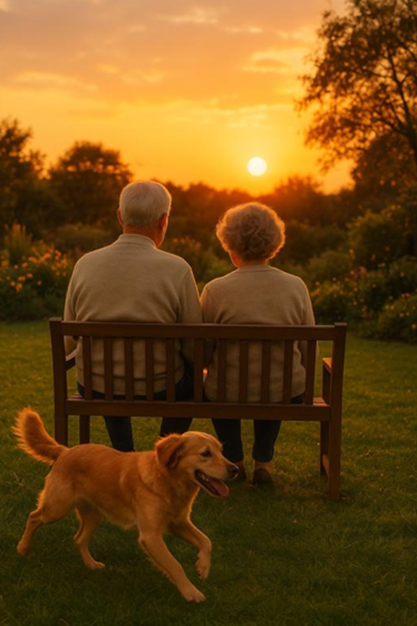
Once again, the sunset spills into the courtyard. The orange-red light reflects on the wall and falls softly on our faces. My husband and I sit side by side on a wooden bench, each holding a cup of tea, watching the dog who has accompanied us for many years running around the garden. He is already ten years old, his fur slightly greying, yet he remains lively like a child. Every time he runs back to us, wagging his tail, I can’t help but laugh.
Many people say that a home without children feels empty. But to me, our home is not empty at all. On the contrary, it is full. Full of peaceful moments shaped by time, full of mutual understanding, and full of that “just right” kind of happiness in everyday life.
When we were younger, my husband and I argued many times about whether or not to have children. Back then, we had just entered the workforce. Our salaries were low, we rented a small apartment, and even the refrigerator had to be bought on instalments. As we watched friends get married and have children one after another, elders often urged us, saying, “You should have a child, so someone will take care of you when you’re old.”
But I always felt that having children should not be merely for future security.
At that time, we often talked about education. Giving birth to a child is easy; raising one is not. Tuition fees, tutoring, enrichment classes, after-school care; each item added up to a heavy burden. What’s more, even if we tried our very best, we might not necessarily raise a “good child.” Stories in the news about parents who worked tirelessly to raise their children, only to see them go astray, made me even more fearful. I told him, “I hope we can live responsibly. We don’t necessarily need to become parents. At the very least, we shouldn’t let the next generation suffer because of our limitations or regrets.”
He was silent for a long time. Finally, he held my hand and said, “Then let’s walk at our own pace.”
From that day on, we decided not to have children and we felt no guilt about it.
Days passed one by one. We moved from renting a home to buying our first house, from squeezing onto buses to travelling together in an old, modest car. That period of life was not easy, but we learned how to find joy in the ordinary. Occasionally, people would ask us, “Don’t you regret not having children?” I would always smile and reply, “No. I have him and I have the dog.”
We adopted our first dog when he was only two months old. Every morning, he would nudge our hands with his nose by the bed, urging us to get up and go for a walk. In the evenings, I cooked in the kitchen while my husband played with the dog in the living room, laughter echoing throughout the house. In that moment, I suddenly understood that the meaning of family does not lie in the number of its members, but in whether they can bring one another peace of mind.
Slowly, we grew old.
Strands of white hair appeared, and our memories were no longer as sharp. When we were young, we used to quarrel fiercely over things like who didn’t wash the dishes or who spent too much money. Looking back now, it all seems rather laughable. That stubborn insistence on “who was right and who was wrong” eventually gave way to the gentleness of time.
Now, we understand compromise better, and we cherish each other more.
After retirement, we moved back near our hometown, where several close friends from high school and university live. When we were young, we gathered in cafés to talk about ideals, romance, and the future. Now, as we’ve all become “silver-haired seniors,” we sit in the community pavilion, brewing tea instead.
We used to drink a cup of sweet bubble tea every week; now, every afternoon requires a pot of hot tea. The fragrance of tea has replaced sweetness, bringing with it a sense of steadiness and calm.
The topics of our conversations have changed as well. We used to talk about dreams; now we talk about health. We used to gossip about romance; now we discuss which clinic has the kindest doctor.
But the laughter remains just as hearty. That familiar bond of friendship grows warmer with time, like an old song that becomes more comforting the more you listen to it.
Sometimes I wonder. If we had had children, what would life be like now?
Perhaps we would be worrying about our children’s marriages, feeling exhausted caring for grandchildren, or troubled by family matters. Maybe our home would be livelier, but also busier.
Yet in our current life, we can take morning walks, drink tea in the afternoon, and watch the sunset in the evening, with few worries weighing on us. That lightness and freedom is a happiness I deeply treasure.
As our dog grows older, he walks more slowly. Every time we go out, I softly say to him, “Take it slow, there’s no rush.”
My husband often laughs and says, “You’re gentler with him than you are with me.”
I reply, “That’s because he doesn’t talk back.” He bursts into laughter.
Life’s gentleness is probably built up in this way little by little.
Now, every day, we sit in the same garden, watching the same sunset. Though our days are ordinary, they feel as warm as if they’ve been gently baked by sunlight.
We have no children, and we have no regrets.
Because we have each other, we have friends, and we have a dog who grows old with us, laughing alongside us.
I believe that happiness has never had a single standard form.
Some people find belonging in crowds; others find love in quiet companionship.
I gently lean against my husband’s shoulder and watch the orange glow in the sky slowly fade.
“This is really nice,” I say.
He nods and replies, “Yes, wherever you are, that’s home.”
The sun sinks lower and lower, its light soft like a warm blanket covering us. Our dog rolls around at our feet, his tail gently tapping the ground. In that moment, I understand:
A home doesn’t have to have children.
But it must have love.
內容:
夕陽又一次灑進院子裡。橘紅的光映在牆上,也灑在我們的臉上。我和老公並
肩坐在木椅上,手裡各自捧著一杯茶,看著那隻陪伴我們多年的狗狗在花園裡
奔跑。牠已經十歲了,毛色有點泛白,但依舊活潑得像個孩子。每當牠跑回我
們身邊,尾巴一搖一搖的樣子,總讓我忍不住笑出聲。
很多人說,沒有小孩的家會很空。但對我來說,我們的家不空,反而很滿——
滿的是歲月的靜好、是彼此的理解、是生活中那份「剛剛好」的幸福。
年輕的時候,我和他曾經為「要不要小孩」吵過很多次。那時候的我們剛出社
會,薪水不高,租著一間小公寓,連冰箱都得分期付款。看著朋友們一個個結
婚生子,長輩也常催促我們:「該生一個啦,老了才有人照顧。」
但我總覺得,生小孩不該只是為了未來的依靠。
那時候我們常聊教育的問題。孩子出生容易,養大卻難。學費、補習費、才藝
課、安親班,一項項算下來都是負擔。更何況,就算我們盡了全力,也不一定
能教出一個「好孩子」。新聞裡那些父母含辛茹苦養大的孩子,最後卻誤入歧
途,讓我更加害怕。我對他說:「我希望我們能負責任地過生活,不一定要當父
母,至少別讓下一代受我們的限制或遺憾。」
他沉默了許久,最後握住我的手說:「那我們就照自己的步調走吧。」
從那天起,我們決定,不要孩子,也不為此感到歉疚。
日子一天天過去,我們從租屋到買下第一間房,從擠公車到一起開著老舊的小
車去旅行。那段時光其實並不容易,但我們學會在平凡裡找快樂。偶爾會有人
問我們:「你們不會後悔沒小孩嗎?」我總笑著回答:「沒有啊,我有他,還有
狗。」我們領養了第一隻狗,那時牠才兩個月大。每天清晨,牠會在床邊用鼻
子頂我們的手,催我們起床散步。晚上,我在廚房煮飯,他在客廳逗狗,笑聲
在屋裡回盪。那一刻我突然明白,家庭的意義,不在於成員的數量,而在於彼
此能否讓對方安心。
慢慢地,我們都老了。
白髮一根根冒出來,記性也沒那麼好了。以前年輕時,為了誰沒洗碗、誰花錢
太多,常常吵得不可開交。現在想起來都覺得可笑。那些「一定要誰對誰錯」
的執著,終究敵不過時間的溫柔。
現在的我們更懂得讓步,也更珍惜彼此。
退休後,我們搬回老家附近,那裡住著幾位高中、大學時期的好朋友。年輕時
我們常在咖啡廳聊天,聊理想、聊戀愛、聊未來。如今大家都成了「銀髮族」,
改在社區裡的涼亭泡茶。
從原本每週要喝一杯手搖飲,到現在每天下午都得泡一壺熱茶。茶香取代了甜
味,卻多了一份穩重與安定。
我們聊天的內容也變了。以前聊夢想,現在聊健康;以前聊愛情八卦,現在聊
哪間診所醫生比較親切。
但笑聲一樣爽朗,那份熟悉的情誼,像老歌一樣越聽越暖。
有時候我會想,如果當初我們有孩子,現在會是什麼樣子?
也許我們會為了孩子的婚姻擔心、為了孫子照顧疲憊、為了家庭瑣事煩惱。
也許我們的家會更熱鬧,但也更忙碌。
然而現在的我們,能夠早上散步、下午喝茶、晚上看夕陽,沒有太多牽掛。那
種自由的輕盈,是我很珍惜的幸福。
狗狗年紀越大,走路也慢了。每次出門,我都會輕聲對牠說:「慢慢走,不趕時
間。」
老公常笑我說:「你對牠比對我還溫柔。」
我回他:「因為牠不會頂嘴。」他聽了哈哈大笑。
生活的溫柔,大概就是這樣被一點一滴堆疊出來的。
現在,我們每天都在同樣的花園裡,看著同樣的夕陽。日子雖然平凡,卻像被
陽光烘過一樣溫暖。
我們沒有兒女,也沒有遺憾。
因為我們有彼此、有朋友、有一隻陪我們笑陪我們老的狗。
我覺得幸福的模樣從來沒有標準。
有人在人群裡找到歸屬,有人則在靜靜的陪伴裡找到愛。
我輕輕靠在老公肩上,看著天邊那片漸漸融化的橘光。
「真好啊。」我說。
他點點頭,回我:「是啊,有你在的地方,就是家。」
夕陽越來越低,光線柔和得像一條溫暖的被子,蓋在我們身上。狗狗在我們腳
邊打著滾,尾巴輕輕拍著地面。那一刻,我明白了——家不一定要有孩子,但
一定要有愛。