
Author: Not Written
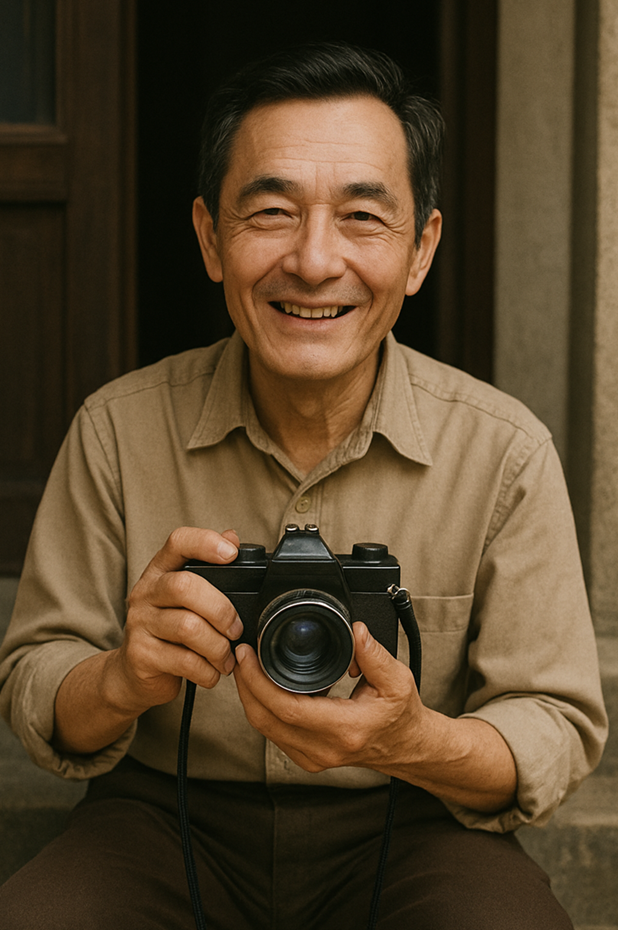
When it comes to my grandpa, I have always felt both dislike and affection toward him at the same time. I like the way he always waits for us at the doorway, smiling warmly as he welcomes us home. At the same time, I dislike his way of thinking and his attitude. When I was little, I used to call him “the photography grandpa,” because every time we went to visit him, he was always holding his camera, taking pictures of us children as we played around. Although I really disliked being photographed, I liked being in front of his lens. My mother once told me that Grandpa was a photographer when he was young. He often traveled abroad to take photos for Tzu Chi’s magazines. Through his camera, things that we could never personally experience were presented right in front of us. He often told us, “If there’s something you want to do, just go and do it. If you can’t achieve it, at least try your best. It’s okay even if you don’t do it well.” For someone of his generation, this way of thinking was very progressive. It influenced my mother as well, making her open-minded. His ideas have always influenced our family. Although sometimes he still lectured us with big life lessons, I later realized that those words that once annoyed me were actually the wisdom he gained from a lifetime of experience. After all, the first half of his life was spent dealing with people. He knew which things were truly beneficial.
I began to dislike him a few years ago, when my grandma was involved in an accident. During that period, the atmosphere at home was extremely oppressive, and hardly anyone spoke. Grandpa seemed as if his soul had been taken away. He no longer held his camera, nor did he wait for us at the door. He became easily angered and spoke harshly, not only to my mother, but also to us. At that time, I only felt irritated. Why was everyone else grieving, while he could only speak in such a severe tone, as if the whole world owed him something? One day, I finally couldn’t take it anymore and shouted at him, “Can you stop being like this?”
He didn’t argue back. He just looked at me quietly, then slowly walked back into his room. At that moment, I suddenly felt a bit guilty, but I didn’t know how to apologize.
Later, I heard from my mother what had really happened. On the day Grandma had the accident, Grandpa sat in the hospital corridor for the entire afternoon, holding that old camera in his hands. My mother said that it was the camera they had used together for the longest time. Every time Grandma went out, she would remind him, “Don’t forget to bring your camera.” That day, he just held the camera and didn’t say a single word. From then on, I never saw him pick up that camera again.
Once, I gathered the courage to ask him, “Grandpa, why don’t you take photos anymore?”
He paused for a moment and replied calmly, “There’s nothing worth photographing.”
That sentence made my heart ache. Only then did I understand that to him, the camera was not merely a tool for recording life, it was a way of preserving love. Grandma was gone, and the people in the photos would never return. So, he chose not to face the lens at all.
As time passed, Grandpa’s health gradually worsened, and his memory also began to fade. Every time we went to visit him, he still greeted us at the door with a smile, but I knew that he could no longer clearly remember when we had last come. Once, he suddenly called me by the wrong name and smiled as he said, “When did you grow so tall?” I smiled back at him, but inside my heart there was an indescribable sadness. It was at that moment that I truly realized time was slowly taking him away, bit by bit.
I began to look again at the photos he had taken in the past. From black and white to color, from film to digital, the evolution of cameras bore witness to his era, and also to the story of our family. There is one photo that I especially love: Grandma sitting in the courtyard basking in the sun, while Grandpa stands beside her wiping sweat from her forehead. The composition isn’t special, and it isn’t very clear, but it holds a gentle sense of truth. Only then did I realize that Grandpa had always loved in his own way. We were simply too young, too eager to understand, and in doing so, we missed his quiet and profound expressions of love.
Now, my feelings toward him are no longer as extreme as they once were. Somewhere between dislike and affection, there is now a layer of understanding. He still nags, and he still gives long-winded advice, but I have learned to listen without frowning, just quietly smiling. Because I know that those words are his way of caring for us, his way of hoping that we will live well.
Sometimes he still picks up his phone and takes photos at random. Although he is no longer as professional as before, it still makes me very happy, because it means he has remembered that “photography grandpa” version of himself again.
If I were to describe my grandpa, I would say that he is a complicated yet genuine person. He has the stubbornness of his generation, but also a rare open-mindedness. He is not perfect, yet he occupies a special place in my heart. The older I grow, the more I understand that behind his strictness lies tenderness, and within his silence lies longing. Perhaps I will still roll my eyes at him from time to time, but I know that beneath all those emotions is love.
Sometimes I wonder, if Grandpa were still holding his camera today, what would he photograph? Perhaps it would be the way our generation has grown up amid busyness. Perhaps it would be the plate of braised pork he loves most on the family dining table. Or perhaps it would be himself, sitting on the rocking chair at the old house, smiling as he watches us come home. If that were the case, I think I would be willing to let him photograph me a hundred times.
Because now I finally understand: those photos were never meant to record how good-looking we were. They were meant to let time pause at its warmest moments.
對於我外公,我一直都是又討厭又喜歡,我喜歡每次都在門口迎接我們到來笑瞇瞇的他,但同
時我也很討厭他的想法和態度,在我小時候,他被我稱作為照相阿公,因為每次去找他,他總
是拿著自己的相機,拍著我們小孩玩鬧的樣子,雖然我很不喜歡拍照,但他的鏡頭我很喜歡,
媽媽說外公年輕時是一名攝影師,經常出國幫慈濟的雜誌拍攝,在他的鏡頭下,那些我們接觸
不到的事物,透過他的鏡頭,展現在我們面前,他經常對我們說,有什麼想做的事就去做,做
不到的事就盡力做,做的不好也沒關係,他的想法對於他那個時代來說,很前衛,以至於我媽
媽也看得很開,他的想法一直影響著我們,雖然有時候還是會說一些大道理,但後來發現,那
些讓我煩躁的話,其實是他一輩子走過的路換來的經驗,畢竟他的前半生幾乎都在與人打交
道,他知道哪些事情有益處,我開始討厭他是因為幾年前,外婆出了意外,那一段時間,家裡
的氣氛一直很壓抑,大家都不太講話。外公整個人像被抽走了靈魂,他不再拿著相機,也不再
在門口等我們。他變得容易生氣,甚至對媽媽、對我們都講話很重。那時候的我只覺得他很煩
,為什麼別人都在難過,他卻只會用那種嚴厲的語氣講話,好像全世界都欠他一樣。有一次我
實在受不了,對他吼了一句:「你可不可以不要再這樣了!」
他沒有回嘴,只是靜靜地看著我,然後慢慢地走回房間。那一刻我突然覺得有點心虛,但也不
懂該怎麼道歉。後來我才從媽媽那裡聽說,外公在外婆出事的那天,一整個下午都坐在醫院走
廊裡,手裡還拿著那台舊相機。媽媽說,那是他們一起用過最久的相機,外婆每次出門也都會
提醒他:「別忘了帶相機。」那天他就這樣握著相機,一句話都沒說。從那之後,我再也沒看過
他拿起那台相機。有一次我鼓起勇氣問他:「阿公,你怎麼不拍照了?」他愣了一下,淡淡地說:
「沒什麼好拍的。」那句話讓我心裡有點酸。我那時候才懂,對他來說,相機不只是紀錄生活的
工具,而是他保存愛的一種方式。外婆走了,照片裡的人再也回不來,他就乾脆連鏡頭都不想
面對了。後來外公的身體慢慢變差,記性也不太好了。每次我們去看他,他都還是笑瞇瞇地在
門口迎接,但我知道,他已經不太記得我們上次什麼時候來過。有一次他突然叫錯了我的名字
,還笑著說:「妳怎麼長那麼高了?」我笑著回答他,但心裡卻有一種說不出的難過。那一刻我
好像才真的意識到,時間正在一點一滴地帶走他。
我開始重新看那些他以前拍的照片。從黑白到彩色,從底片到數位,相機的變化見證了他的時
代,也見證了我們這個家庭的故事。有一張照片我特別喜歡,是外婆坐在院子裡曬太陽,外公
在一旁幫她擦汗。那張照片裡沒有特別的構圖,也不算清晰,但卻有一種溫柔的真實。那時候
我才明白,原來外公一直都用他的方式去愛,只是我們太年輕,太急著去理解,反而錯過了他
安靜而深沉的表達。現在的我,對他的感覺已經沒有當年那麼極端。討厭與喜歡之間,好像有
了一層理解。他還是會碎碎念、還是會講大道理,但我學會聽的時候不再皺眉,而是靜靜地
笑。因為我知道,那些話是他對我們的關心,是他希望我們過得好的方式。有時候他還是會拿
起手機亂拍一通,雖然早就不如以前那麼專業,但我還是很開心。因為那代表,他又想起了那
個「照相阿公」的自己。如果要我形容外公,我會說他是一個複雜卻真實的人。他有他那一代的
固執,也有難得的開明。他不完美,但卻在我心中佔了一個特別的位置。長大後我越來越能理
解,他的嚴厲背後藏著溫柔,他的沉默裡藏著思念。也許我還是會偶爾被他氣到翻白眼,但我
知道,那些情緒之下,其實都來自於愛。有時我會想,如果外公現在還拿著相機,他會拍下什
麼呢?也許是我們這一代在忙碌中長大的模樣,也許是家裡餐桌上那盤他最愛的滷肉,或是
他自己,坐在老家的搖椅上,笑瞇瞇地看著我們回家。到那時,我想我會願意被他拍一百次。
因為我終於懂,那些照片不是為了記錄我們長得多好看,而是為了讓時間停留在最溫暖的瞬
間。